


In This Guide
The Science Behind Vape Clouds
What you exhale after a puff is neither smoke nor steam, it's an aerosol: a suspension of extremely fine liquid droplets in air, similar in principle to fog, mist, or the visible cloud your breath makes on a cold morning. No combustion happens inside a vape, which is exactly why there's no smoke, and it isn't water vapour either, which is why the term "steam" doesn't quite fit.
What actually determines how big and dense that cloud looks comes down to a handful of measurable factors: the VG content of your e-liquid, how much surface area and power your coil has, how much air moves through the device, and even the temperature of the room you're vaping in. This guide walks through each one, with real e-liquids and devices built around exactly this science.
Vapour vs Smoke vs Steam
Smoke is the visible product of combustion, tiny particles of ash, tar and unburnt material released when something actually burns. A vape device never reaches combustion temperatures, and there's no burning material involved at all, which is why "vape smoke" is technically the wrong term for what you're seeing.
Steam, meanwhile, is water in its gaseous phase, invisible until it cools and condenses back into visible droplets, like the plume above a boiling kettle. Vape aerosol behaves similarly in that it condenses into visible droplets, but the substance itself is a mix of PG, VG, flavourings and nicotine rather than water, so "vapour" is closer, though technically an aerosol is the most accurate term.
The Actual Process: Heat, Vaporise, Condense
The entire cycle happens in a fraction of a second, every single puff.
Heating
The coil's wicking material, saturated with e-liquid, is rapidly heated by the battery to well past the boiling point of PG and VG.
Vaporising
The e-liquid briefly turns to gas as it leaves the coil, carrying flavour and nicotine compounds with it into the airflow stream.
Condensing
As that gas mixes with cooler air moving through the mouthpiece, it rapidly condenses back into countless microscopic liquid droplets, the visible cloud.
That last step is the key one. The "cloud" you see and exhale isn't the gas phase at all, it's already condensed back into an aerosol of tiny liquid particles by the time it leaves your mouth. This is exactly the same physical process behind theatrical fog machines and the visible mist from a cold drink on a hot day.
VG's Role in Cloud Production
Vegetable glycerine is hygroscopic, meaning it readily attracts and holds onto moisture from the surrounding air, and it has a notably higher boiling point and viscosity than propylene glycol. When VG vaporises and then condenses, it forms larger, more numerous droplets that scatter light more visibly and hang in the air longer, producing the dense, billowing clouds associated with sub-ohm vaping.
Propylene glycol, by contrast, produces a thinner vapour that disperses much faster and less visibly, which is exactly why nic salts at a balanced 50/50 ratio produce noticeably smaller clouds than a 70/30 VG-heavy shortfill, even on similar hardware.
Coil Surface Area and Wattage
More heat vaporises more e-liquid per puff, up to the point where the coil starts scorching rather than cleanly vaporising. A larger coil surface area, like a mesh or dual mesh structure, also vaporises a bigger volume of liquid simultaneously than a thin wire ever could, feeding more raw material into the aerosol-forming process described above.
This is precisely why dedicated cloud-chasing setups combine high wattage with large-surface mesh coils: more liquid vaporised per puff means more droplets condensing into the visible cloud, provided the e-liquid and airflow are suited to that output.
Airflow's Role in Cloud Size
Airflow does two competing things at once: it dilutes the concentration of vapour with additional air, but it also determines how much total volume passes through the device per puff. A wide-open direct-to-lung airflow pulls a much larger total volume of air and vapour through in one draw than a tight MTL restriction does, and that larger total volume is what actually produces the big, billowing clouds associated with sub-ohm vaping, even though the vapour itself is technically more diluted per unit of air.
A tight MTL draw, by contrast, produces a smaller total volume, so even though it's less diluted, the overall cloud looks and feels far more modest. This is why cloud-chasing setups always pair high VG and high wattage with wide-open airflow, all three factors need to point the same direction to produce a genuinely large cloud.
Why Cold Air Makes Clouds Look Bigger
Cold, humid air is already closer to its saturation point, the point at which it can't hold any more moisture without condensing. Exhaling warm vapour into cold air pushes the surrounding air over that threshold more easily, causing extra ambient moisture to condense alongside the vapour itself, which is why clouds often look larger and linger longer outdoors on a cold day than they do in a warm, dry room.
This is the same effect behind visible breath on a frosty morning, it isn't unique to vaping, it's basic atmospheric physics acting on top of the aerosol your device already produced.
Built for Bigger Clouds
If the science above has you chasing denser clouds, these real products are built specifically around the factors that matter: high wattage, large coil surface area, and a properly matched high-VG e-liquid.

Smok Nord 6 Pod Kit
Free UK delivery available
Dual mesh pods and up to 80W output, exactly the combination of large surface area and high power that drives dense cloud production.
Buy Now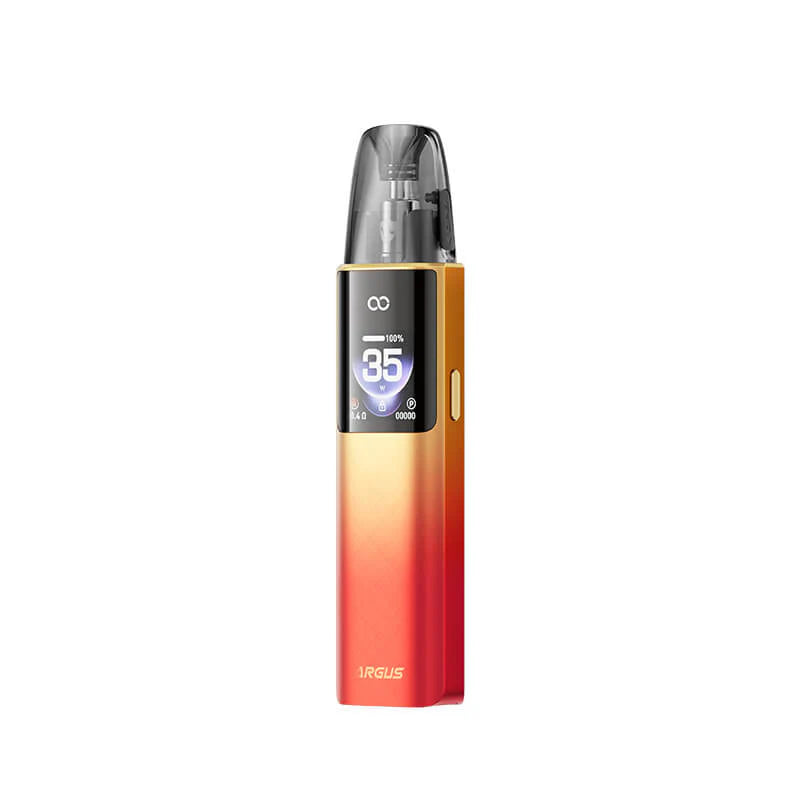
VooPoo Argus G4 Pod Vape Kit
£22.00
Multi-Ohm mesh pod technology running 5 to 35W, with wider RDL airflow options to move more total volume per draw.
Buy Now
Big Drip 100ml Shortfill by Doozy Vape
£8.99
A 70VG/30PG blend, the ratio that actually drives dense cloud formation, 0mg with room to add your own nic shot.
Buy NowAll three factors need to line up together, high VG e-liquid, a high-wattage mesh coil device, and open airflow, to see the difference the science above actually describes. Browse the full advance kits range for more high-output options.
Frequently Asked Questions
Is vape cloud actually smoke?
No. Smoke is produced by combustion, and no burning takes place inside a vape device. What you see is an aerosol, a suspension of tiny liquid droplets formed when heated e-liquid vapour condenses back into visible particles.
Why does VG produce bigger clouds than PG?
VG is hygroscopic and has a higher viscosity and boiling point than PG. When it vaporises and condenses, it forms larger, more numerous droplets that scatter light more visibly and hang in the air longer.
Does higher wattage always mean bigger clouds?
Generally yes, up to the point where the coil can no longer cleanly vaporise the extra heat without scorching. Beyond that point, more wattage just produces a burnt taste rather than a bigger cloud.
Why do clouds look bigger outside on a cold day?
Cold, humid air is already close to its saturation point, so exhaled warm vapour pushes it over that threshold easily, causing extra ambient moisture to condense alongside the vapour itself, the same effect as visible breath on a frosty morning.
Can I get big clouds from a small MTL pod kit?
Not really. Small MTL kits are built for low wattage, tight airflow and thinner 50/50 e-liquid, all of which work against dense cloud production by design. Genuine cloud production needs a high-wattage device, wide airflow and high-VG e-liquid together.
Is vapour just water vapour, like steam?
No. While the process of condensation is similar to how steam becomes visible, vape aerosol is made of PG, VG, flavourings and nicotine rather than water, so "steam" isn't an accurate description even though the visual effect looks similar.
Have a different question? Browse our full Vaping FAQs or explore our Vaping Knowledge hub.
Explore More at Ecosmok
Advance Vaping Kits
Higher-wattage devices built for dense cloud production.
100ml Shortfills
High-VG e-liquid built specifically for sub-ohm cloud chasing.
Pods & Coils
Mesh coils with the surface area to maximise vapour production.
Nic Salt E-Liquids
Prefer flavour over clouds? Balanced 50/50 blends for MTL kits.
Starter Vaping Kits
New to vaping? Start simple before stepping up to sub-ohm.
Talk to Our Team
Not sure what setup gets you the clouds you want? We can help.
Leave a comment